Key facts: Water Damage Cleanup
- Cleanup means removing water and wet materials; drying and repair are separate stages that follow it.
- The U.S. EPA advises drying wet building materials and furnishings within 24 to 48 hours to help prevent mold growth.
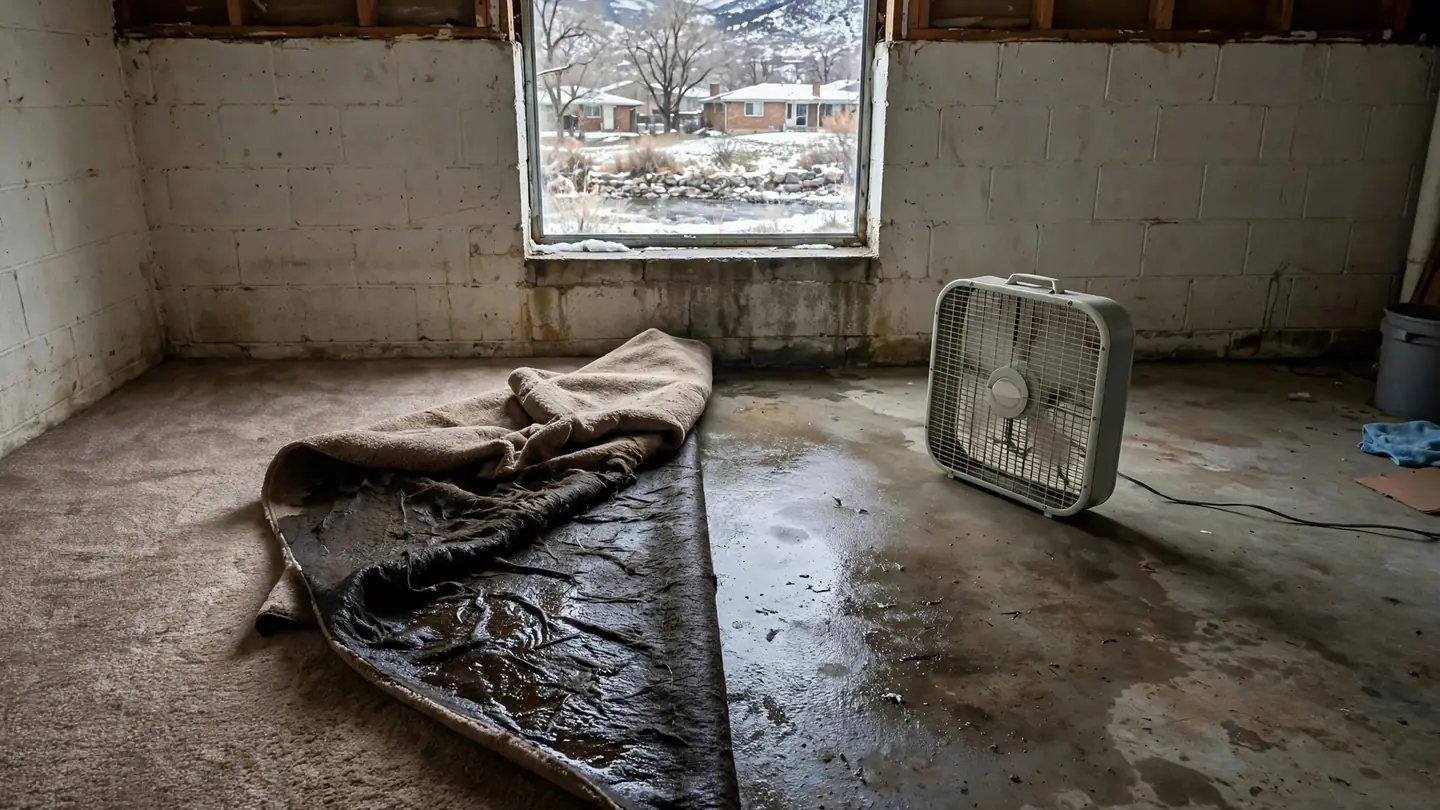
- Carpet pad soaks up far more water than the carpet itself and is often removed even when the carpet is saved.
- Water that has touched sewage or floodwater is handled as contaminated, and porous items it touched are usually discarded.
- Many Wheat Ridge homes are brick ranches from the 1950s to 1970s with finished basements, where most cleanup work happens.
Quick answer
What water damage cleanup covers
Cleanup is the first, physical part of a water loss: getting the water and the ruined materials out of the house so the rest can dry.
- Stop and isolateThe source is shut off, power to wet areas is made safe, and the affected rooms are identified before anything is moved.
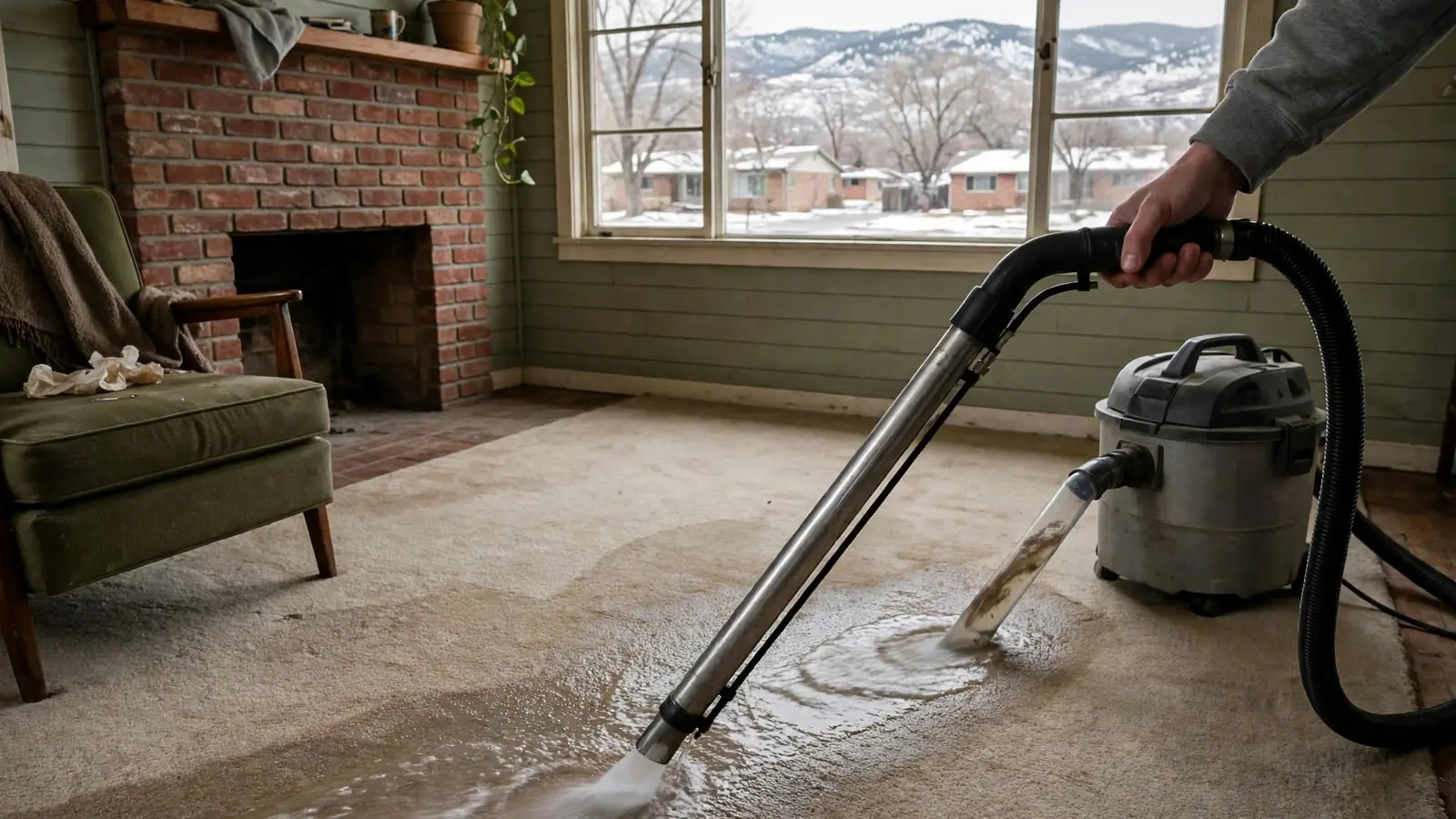
- ExtractStanding water is pulled out of floors and carpet with pumps and extraction wands, which removes far more water than fans ever could.
- Remove what cannot drySaturated pad, swollen particleboard, wet insulation and drywall that has wicked water are cut out and bagged.
- Clean and treatRemaining surfaces are cleaned, and an antimicrobial may be applied where the water was dirty or has sat for a while.
- Hand off to dryingAir movers and dehumidifiers are set up, and moisture readings start a log that decides when rebuilding can begin.
Why speed matters
Why the first day decides how big the job becomes
Water keeps moving after the leak stops. Drywall acts like a wick, pulling moisture upward through the gypsum and paper facing, often a foot or more above the visible waterline within a day. Carpet pad behaves like a sponge laid across the whole room, holding water against the subfloor or concrete and feeding humidity into the air. Wood baseboards, door casings and the bottoms of cabinets swell. Every hour that passes widens the area that has to be opened up.
Time also changes what the water is. Clean water from a supply line starts out relatively harmless, but once it sits in carpet, picks up dust and soil and warms to room temperature, bacteria multiply. The U.S. EPA advises drying wet materials within 24 to 48 hours to help prevent mold growth, and that window is the reason restoration crews work quickly on day one. [1] A cleanup that starts the same evening often rescues carpet, cabinets and most of the drywall. One that starts three days later can mean tearing out a whole finished basement.
That does not mean panic. It means doing the simple things right away: shutting off the water, keeping people and pets out of wet rooms with electrical hazards, taking photos, and getting extraction started as soon as you can.
Signs
Signs you need more than towels and a fan
Water under the carpet
If the carpet squelches when you step on it, the pad below is saturated and needs extraction or removal.
A tide line on drywall
A brownish line or bubbling paint above the floor shows how far water has wicked into the wall.
Swollen trim and cabinets
Baseboards that pull away or cabinet bases that bulge are holding water that will not dry on its own.
A musty smell after a day
Odor after 24 hours suggests moisture trapped in materials, not just on the surface.
Water in more than one room
Water travels under walls along the slab or subfloor, so the wet area is usually larger than it looks.
Ceiling stains below a bathroom
Water from above sits on top of drywall ceilings and insulation, which can sag or fall without warning.
Sources
Where water damage in Wheat Ridge homes usually comes from
Most cleanup calls in a city like Wheat Ridge trace back to plumbing and appliances rather than weather. Washing machine supply hoses fail, water heaters leak from the bottom of the tank, toilet supply lines crack, dishwashers leak under cabinets, and ice makers drip behind refrigerators for weeks. Because so many local houses have the laundry and water heater in the basement, these failures put water directly onto the lowest floor.
Weather plays its part too. Colorado's cold snaps freeze pipes in exterior walls, unheated crawl spaces and garages, and the damage shows up when the pipe thaws and sprays. Heavy spring snow melts against foundations, and summer thunderstorms can overwhelm gutters and window wells in minutes. Sewer backups, where the drain line from the house cannot carry water away, push dirty water up through basement floor drains and toilets; that is a different category of cleanup and is covered on our sewage cleanup page.
Knowing the source matters because it decides the water category, which then decides what can be saved. A contractor will ask you about it early on the call.
Water categories
How the water type changes cleanup
| Category | Typical source | What it means for cleanup |
|---|---|---|
| Clean water | Broken supply line, overflowing sink with clean water, ice maker line | Many materials can be dried and kept if work starts promptly |
| Gray water | Washing machine drain, dishwasher discharge, toilet overflow with urine but no feces | More cleaning, more pad and porous material removed, antimicrobial often used |
| Black water | Sewer backup, floodwater from outside, toilet overflow with feces | Porous items that touched it are usually discarded; protective gear required |
| Clean water that sat | A clean leak left for several days | Treated as gray or worse because bacteria have had time to grow |
Extraction
How extraction works and why it comes before drying
Extraction is the single biggest step in any cleanup. A truck-mounted or portable extractor pulls water out of carpet and pad through a wand or a weighted tool the technician stands or rolls on. On hard floors, water is pushed to a low point and vacuumed, and a submersible pump handles deep standing water in a basement. Removing water as liquid is far faster than evaporating it later with fans and dehumidifiers.
A thorough extraction is slow and deliberate. The technician works in overlapping passes and keeps going until little or no water comes up through the clear section of the wand. Skipping this, or doing a single quick pass, leaves the drying equipment fighting gallons of water that could have been removed in an hour.
If you are waiting for help, you can start with a wet-dry vacuum on hard floors and pick up small items from the floor. Do not use a household vacuum, and do not stand in water while touching anything electrical.
Carpet and pad
Deciding whether carpet and pad can be saved
Carpet and pad are separate decisions. The carpet itself is often salvageable after a clean-water loss if it is extracted quickly, lifted, and dried from both sides. The pad underneath is a different story: it is thin foam that holds a large amount of water and tends to break down when soaked, so most contractors remove wet pad and replace it after drying. Taking it out also lets air reach the floor beneath.
Contamination changes the answer. Carpet that was soaked by sewage or floodwater is normally discarded along with its pad, because it cannot be reliably cleaned all the way through. Carpet that has delaminated, meaning the backing has separated from the face, will not lie flat again. Carpet that sat wet long enough to smell is also a poor candidate for keeping.
In finished basements, carpet is often installed over a concrete slab with tack strip nailed into the concrete. Contractors pull the carpet back, cut out the pad, and leave the carpet folded or floated so air movers can blow underneath it. If you have glued-down carpet or carpet tiles, the approach is different and may involve removing the flooring entirely.
Walls
Drywall, insulation and the flood cut
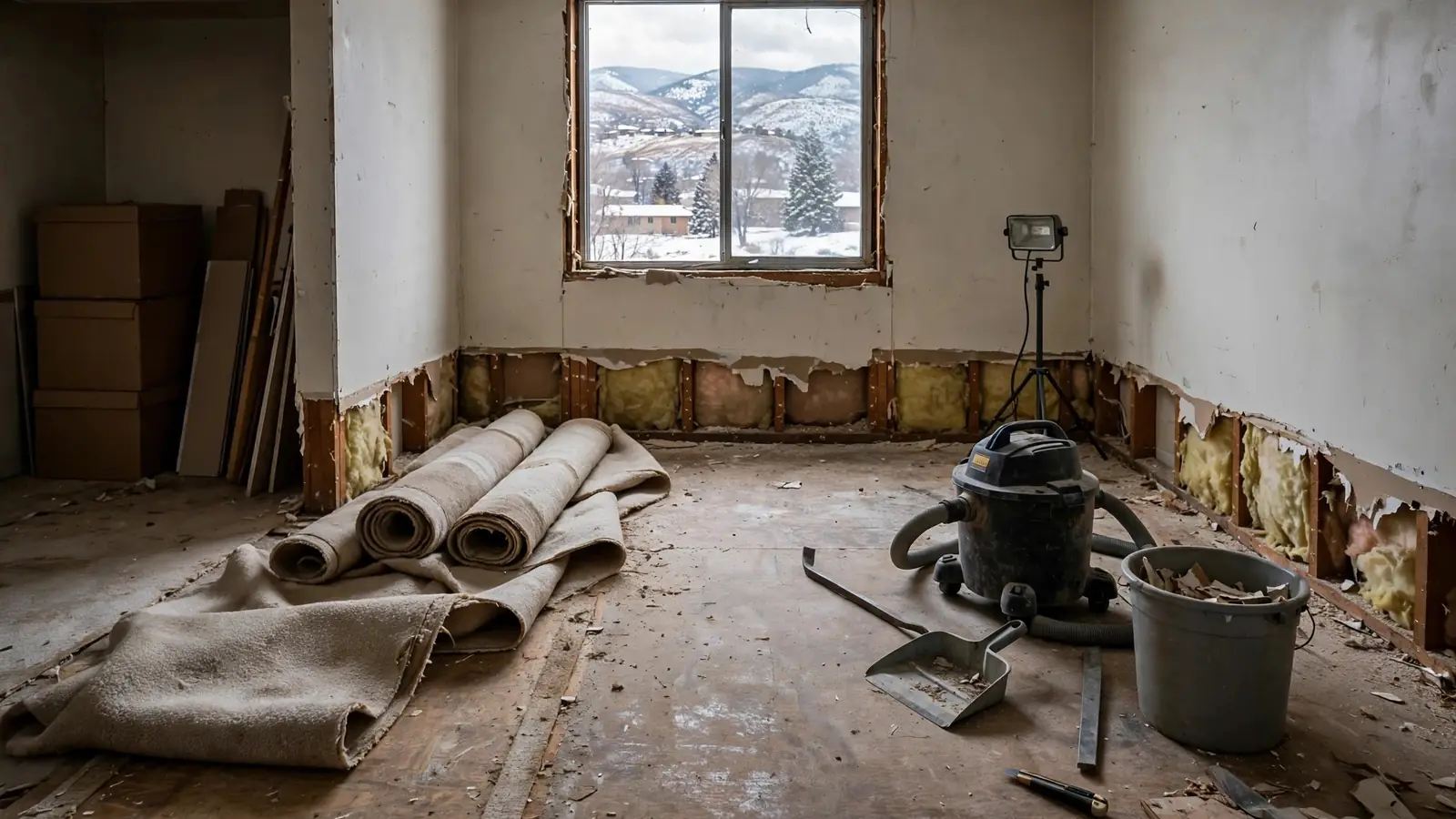
When water reaches drywall, a contractor measures how far up it has wicked using a moisture meter, then decides how much to remove. A common approach is a flood cut, where the drywall is cut in a straight line some distance above the highest wet reading, often 2 or 4 feet off the floor, and the lower section is removed. A straight cut makes the later patch cleaner and gives a clear view into the wall cavity.
Behind the drywall in a basement there may be fiberglass batts, foam board against the foundation, or nothing at all. Wet fiberglass holds water and should come out. Rigid foam usually does not absorb much and may be dried in place, though the space between foam and concrete can trap moisture. Wood bottom plates and studs are generally dried rather than replaced unless they are rotten or contaminated.
Not every wet wall needs to be cut. If the water was clean, the exposure was short, and readings show only the bottom inch or two is damp, a contractor may remove the baseboard, drill small holes behind it, and dry the cavity by forcing air into it. That decision should be made from readings, not guesswork.
Process
How a typical cleanup visit runs
- 1
Walkthrough
The contractor locates the source, checks that it is stopped, looks at electrical hazards, and maps the wet area with a moisture meter and sometimes a thermal camera.
- 2
Photos and notes
Each room is photographed before work starts. These records help with insurance and with tracking drying progress later.
- 3
Contents moved
Furniture is moved out of the wet area or lifted on blocks; boxes on the floor are opened and sorted; rugs and soft items are bagged or set aside.
- 4
Water out
Standing water is pumped and extracted from carpet and hard surfaces.
- 5
Demolition
Wet pad, baseboards, saturated drywall and insulation are removed according to the readings and water category.
- 6
Cleaning
Exposed surfaces are cleaned; an antimicrobial may be used on framing and concrete after dirty water.
- 7
Drying setup
Air movers and dehumidifiers are placed, and a drying plan is explained to you, including how long equipment will likely run.
Contents
What happens to belongings on the floor
Basements collect things, and much of a cleanup is sorting. Hard plastic bins, glass, metal and solid wood furniture usually clean up well after a clean-water leak. Cardboard boxes, paper, books, upholstered furniture and mattresses that soaked up water are much harder to save. Photos and important documents can sometimes be frozen to stop damage while you decide what to do with them.
Write down or photograph everything you throw out, especially if you expect to make an insurance claim. Your insurer will usually want to know what was lost, roughly how old it was, and may want to see damaged items or photos of them. A contractor can help with a list, but it is your record to keep.
Anything that touched sewage or outside floodwater falls into a stricter category: porous items generally go, and hard items need to be cleaned and disinfected before they come back into the house.
Finished basements
Finished basement cleanup in Wheat Ridge
Many Wheat Ridge homes have finished basements added decades after the house was built, sometimes in more than one stage. That layering shows up during cleanup: a bedroom with carpet over a slab, a bathroom with vinyl over an older tile floor, paneling in one room and drywall in the next, and a laundry with a floor drain that may or may not work well.
Each surface responds differently to water, and a contractor needs to understand how the space was put together before deciding what to remove. Paneling may hide a second layer of wall finish behind it. A drop ceiling makes it easy to check above for leaks from the floor above. Built-in shelving or a bar may sit on the wet floor and need to come out.
- Ask how the drying plan handles each room
- Check that the laundry floor drain is clear
- Keep the furnace area dry and accessible
Materials
What usually stays and what usually goes
| Material | Usually | Why |
|---|---|---|
| Carpet | Kept if extracted and dried quickly | The face fibers dry well when lifted and aired |
| Carpet pad | Removed and replaced | It holds water and breaks down |
| Drywall | Dried if only slightly wet; cut if soaked | Gypsum softens and paper facing feeds mold |
| Fiberglass insulation | Removed if wet | It stays damp and loses insulating value |
| Hardwood flooring | Dried with specialist mats if caught early | Planks cup when wet and may flatten as they dry |
| Laminate flooring | Often replaced | The fiberboard core swells and does not recover |
| Particleboard cabinets | Often replaced if bases swelled | Particleboard does not return to shape |
| Solid wood furniture | Usually kept | Dries slowly and can be refinished |
DIY limits
What you can safely do yourself
For a small, clean leak caught early, such as a supply line that wet a few square feet of vinyl flooring, a homeowner can often manage the cleanup: shut off the water, mop and wet-vac, run fans and a dehumidifier, and watch for odor or staining over the next few days. Pulling back a small section of carpet to dry the pad underneath is also reasonable.
It becomes a professional job when water has soaked more than one room, reached under walls, saturated a finished basement, come from a dirty source, or when you cannot tell whether it has reached inside walls and ceilings. Household fans move air but do not remove moisture from it, and without a proper dehumidifier the basement can stay damp for weeks. Moisture meters and thermal cameras also show wet areas you cannot feel by hand.
If there is any chance water has reached electrical outlets, a breaker panel or appliances, keep away from the area until the power is safely off.
On your call
Useful things to ask when you call
The contractor you are connected with is independent. These questions help you understand their approach on the call.
- Where do you start?Expect a clear order: safety, source, extraction, removal, drying.
- How will you decide what to cut out?The answer should refer to moisture readings and water category, not a fixed amount of demolition.
- Do you document for insurance?Photos, moisture logs and a materials list help your claim.
- How will you check that it is dry?Ask how drying will be measured and who decides when it is finished.
- Is testing needed for older materials?In older Wheat Ridge homes, asbestos and lead questions are reasonable before demolition.
After cleanup
What comes after cleanup: drying and rebuild
Cleanup ends when the water and ruined materials are out and drying equipment is running. Drying usually takes several days, depending on how much water there was, what materials are involved and how humid the air is. During that time, equipment runs constantly and readings are taken regularly. Our water mitigation and drying page explains that stage in more detail.
Rebuild, meaning new drywall, pad, carpet, baseboard and paint, should start only after readings confirm the structure is dry. Closing a wall over damp framing traps moisture and invites mold and odor later. Some restoration contractors also handle the rebuild; others hand it to a general contractor. Rebuilding work may need permits from the City of Wheat Ridge Building Division, depending on what is being replaced.
If you are unsure whether moisture is still hiding somewhere, our guide to hidden moisture behind walls describes what to look for.
The full list of services shows how cleanup connects to flood, sewage and commercial work, and the neighborhood pages describe local housing.
Prevention
Lowering the chance of another cleanup
Most water losses in Wheat Ridge homes start with something that could have been caught. Replace rubber washing machine hoses with braided stainless ones and check them every year. Know where your main water shutoff is and make sure it turns. Look at the base of the water heater for rust or dampness. Keep gutters clear and downspouts pointing away from the foundation, and make sure window wells drain.
In winter, keep heat on in every part of the house, open cabinet doors under sinks on exterior walls during hard freezes, and disconnect garden hoses before the first freeze so outdoor faucets can drain. A simple battery water alarm on the basement floor next to the water heater and washing machine is a small step that can turn a ruined basement into a mopped floor.
FAQ
Water damage cleanup questions from Wheat Ridge
How soon should water damage cleanup start?
As soon as the source is stopped and the area is safe. The EPA advises drying wet materials within 24 to 48 hours to help prevent mold, so extraction on the first day matters.
Can my carpet be saved?
Often, if the water was clean and extraction starts quickly. The pad is usually replaced. Carpet soaked by sewage or floodwater is normally discarded.
Why are they cutting my drywall when it looks dry?
Drywall wicks water upward inside, so it can be wet where the surface looks fine. Moisture readings show how far it has gone.
Is it safe to stay in the house during cleanup?
Usually yes for a clean-water loss, if the wet area is closed off and power is safe. Sewage, mold or extensive demolition may change that.
Do I need to move everything myself?
No. Contents handling is normally part of cleanup. Do move valuables and documents if you can do so safely.
Will my insurance cover cleanup?
It depends on your policy and the cause. Sudden pipe bursts are often covered; gradual leaks and outside floodwater often are not without specific coverage. Check with your insurer.
How long does cleanup take?
Extraction and removal are often done in a day. Drying usually runs several more days, followed by rebuild.
Is the call answered by someone in Wheat Ridge?
Your call is connected to an independent contractor serving the Wheat Ridge area, who speaks with you on that call.