
Key facts: Sewage Cleanup
- Sewage is treated as the most contaminated category of water in restoration and requires protective equipment to handle.
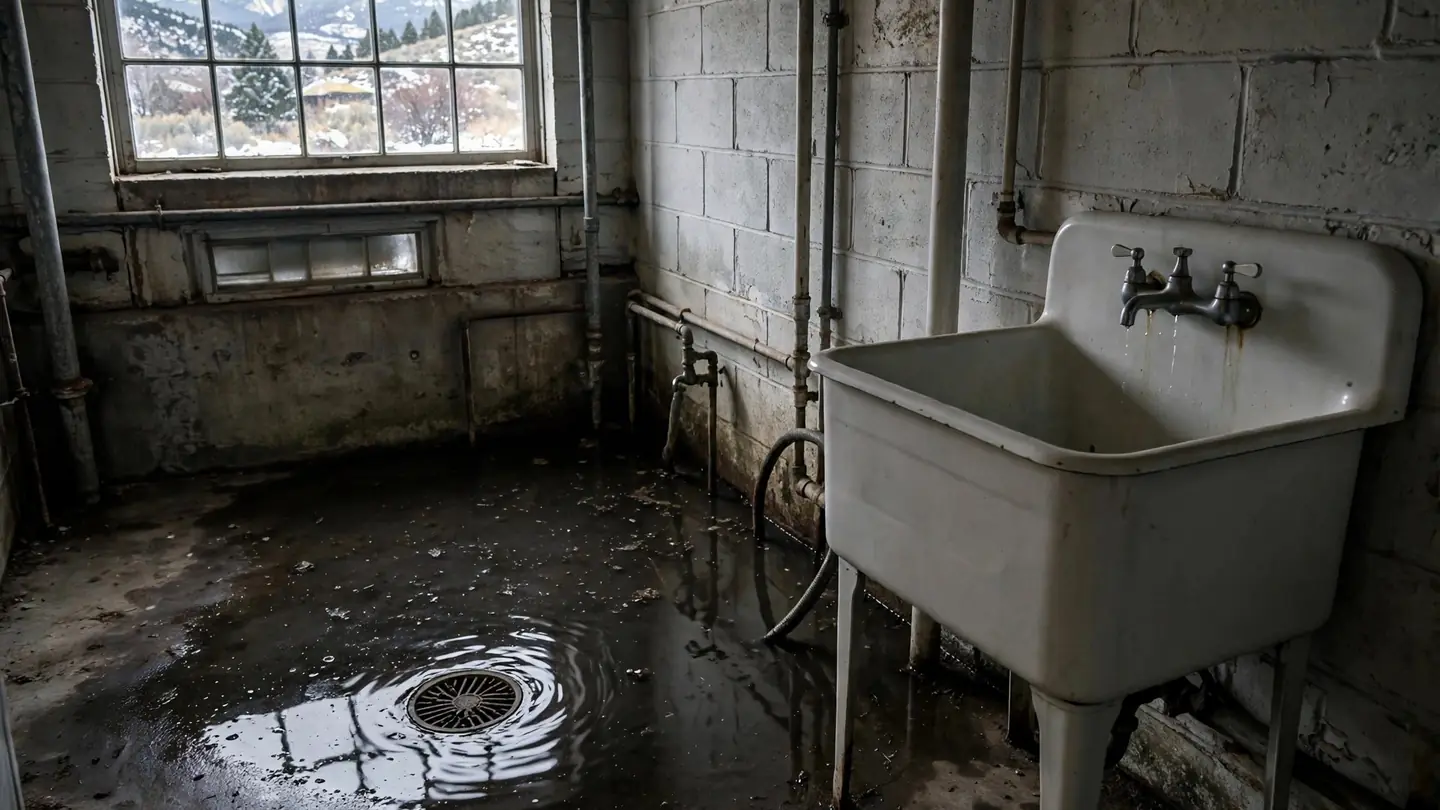
- In homes with basements, sewer backups usually appear first at the lowest drain, often a floor drain near the laundry or furnace.
- Porous materials soaked by sewage, such as carpet, pad, drywall and upholstered furniture, are generally discarded rather than cleaned.
- Many homeowners policies exclude sewer backup unless a water backup endorsement has been added.
- Wheat Ridge is served by several special districts for sewer service rather than a single city sewer utility.
Quick answer
What sewage cleanup involves
Sewage cleanup is about removing contamination, not just water. That changes nearly every decision compared with a clean-water leak.
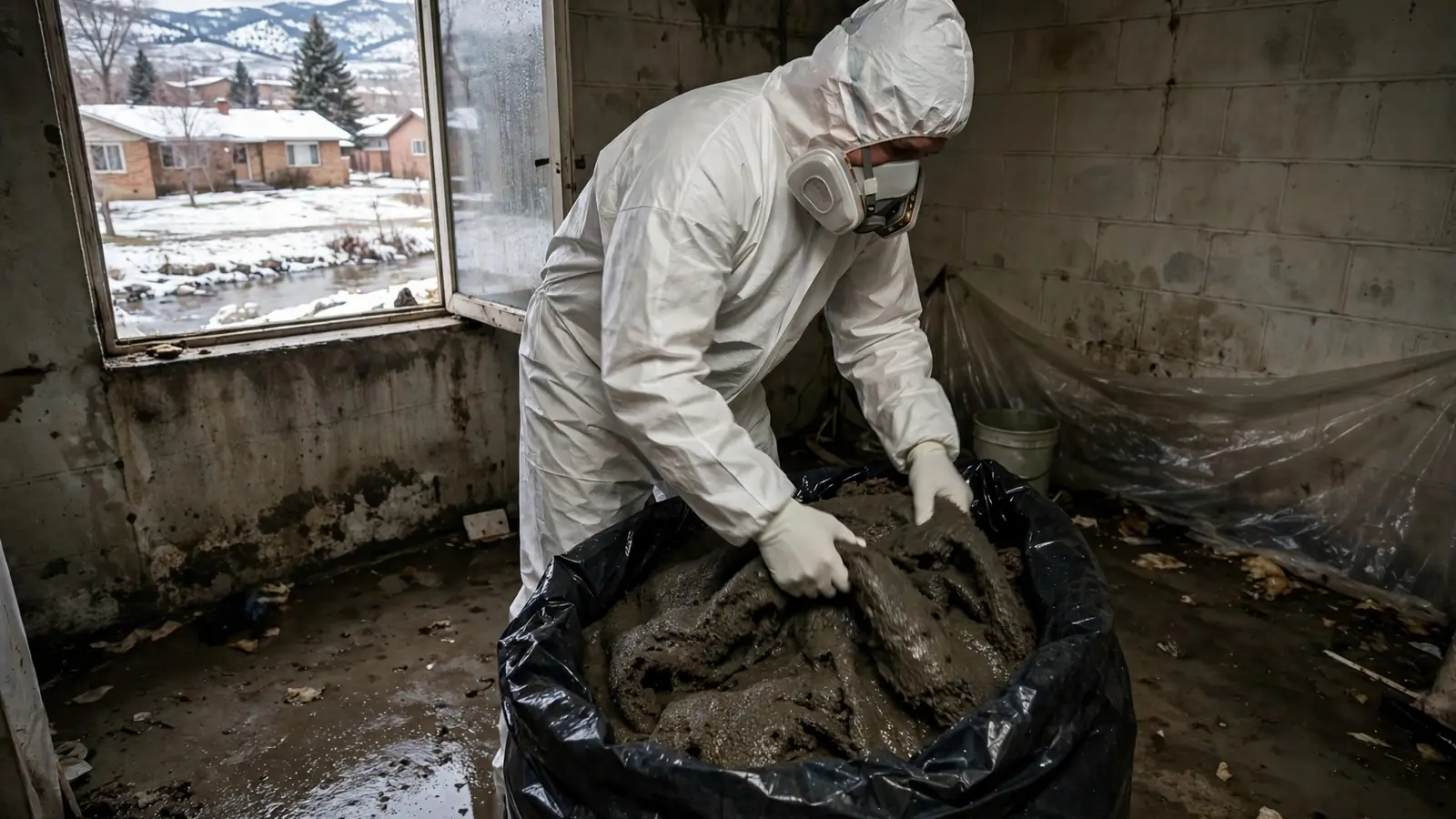
- Protect peopleEveryone stays out of the affected area; workers wear boots, gloves, eye protection and respiratory protection.
- Stop the backupStop running water in the house and have the blockage cleared by a plumber or the sewer district.
- Remove waste and waterLiquid and solids are pumped and vacuumed out with equipment that can handle debris.
- Remove porous materialsCarpet, pad, drywall, insulation and soft contents the sewage touched are bagged and removed.
- Clean, disinfect, dryHard surfaces are scrubbed, disinfected and then dried and checked before rebuild.
Why basements
Why sewage shows up in Wheat Ridge basements
Every drain in a house runs into a sewer lateral, the private pipe that carries wastewater from the house to the public main in the street. If that lateral is blocked, or the main is overloaded, wastewater has nowhere to go and rises up through the lowest opening in the house. In most Wheat Ridge homes, that lowest opening is the basement floor drain, a basement shower or a basement toilet.
Many local houses date from the 1950s to the 1970s, and laterals of that era were often made of vitrified clay or other older materials, laid in short sections with joints that tree roots can find. Over the decades roots enter the joints, grease builds up, and sections sag or crack. A backup often starts with slow drains or gurgling, then arrives all at once on a busy morning when several fixtures run together.
Heavy rain can also cause backups when stormwater gets into sanitary sewer lines through cracks and improper connections, overloading the system. In that case several houses on a street may be affected at once.
Warning signs
Signs a sewer backup is coming
Several slow drains at once
One slow sink is a local clog; slow drains across the house point to the main line.
Gurgling toilets
Air pushed back through the trap when other fixtures drain.
Water in the floor drain
A floor drain that holds water or burps when the washer drains.
Sewer smell in the basement
Odor near drains can mean a dry trap or a problem in the line.
Toilet water rises when the tub drains
The water cannot get past a blockage further down.
Lush grass over the lateral
A leaking sewer line can fertilize a stripe across the lawn.
Sources
Types of sewage loss
| Source | How it shows up | Typical extent |
|---|---|---|
| Main line blockage | Backup through floor drain or lowest toilet | Basement floor, often spreading under walls |
| Toilet overflow with waste | Water over the bowl onto the bathroom floor | Bathroom and room below if on an upper floor |
| Broken drain line inside a wall or ceiling | Staining, smell, dripping below | Hidden; framing and insulation affected |
| Storm-related sewer surcharge | Backup during heavy rain | Can affect many homes on one street |
| Failed ejector or sewage pump | Basement bathroom flooding | Area around the pump pit |
Who to call first
Plumber, sewer district or restoration contractor?
Two problems need solving at once: the blockage, and the mess. A plumber or drain cleaning company clears the line, usually with a cable machine or water jetter, and may run a camera to find the cause. A restoration contractor handles the cleanup. Some restoration companies work closely with plumbers and can coordinate both.
If the backup seems to be coming from the public main rather than your own lateral, for example because neighbors are affected too, contact the sewer district that serves your address. Wheat Ridge is not served by a single city sewer department; several special districts provide sewer service in different parts of the city, so the right number depends on where you live. Your sewer bill shows which district serves you.
Do not run water in the house until the line is cleared, or more sewage will come up into the basement.
The job
How sewage cleanup proceeds
- 1
Set up safely
The contractor isolates the area, protects clean parts of the house with plastic sheeting, and puts on protective equipment.
- 2
Extract
Sewage and water are pumped and vacuumed; solids are removed by hand.
- 3
Remove contaminated materials
Carpet, pad, lower drywall, baseboard, insulation and soft contents are cut out, bagged and taken away.
- 4
Clean
All hard surfaces the sewage touched are scrubbed with detergent to remove organic matter; disinfectants work poorly on dirty surfaces.
- 5
Disinfect
An appropriate disinfectant is applied and left for the contact time on its label.
- 6
Dry
Dehumidifiers and air movers run until readings are normal.
- 7
Verify
The area is inspected for remaining residue and odor before it is cleared for rebuild.
Keep or discard
What can be saved after a sewer backup
| Item | Usual outcome |
|---|---|
| Carpet and pad | Discard |
| Drywall touched by sewage, plus a margin | Remove |
| Fiberglass insulation | Remove |
| Upholstered furniture and mattresses | Discard |
| Concrete floors and walls | Clean and disinfect |
| Wood framing | Clean, disinfect and dry; replace if damaged |
| Ceramic tile | Clean and disinfect; regrout if needed |
| Hard plastic, metal and glass items | Clean and disinfect |
| Clothing and washable fabric | Hot wash with detergent, or discard |
| Paper, books and cardboard | Discard unless irreplaceable; seek specialist advice |
Small overflows
Toilet overflows and small sewage spills
Not every sewage loss is a flooded basement. A toilet overflow in a hard-floored bathroom, caught right away, may be manageable by a careful homeowner: wear gloves, remove the water, wash the floor with detergent, then disinfect, and wash everything you used. The problem grows when the overflow reaches carpet, runs under the vanity or soaks into the subfloor, or when water from an upstairs bathroom reaches the ceiling below.
If you cannot see where the water went, or the bathroom is upstairs, it is worth having it checked. Contaminated water trapped in a ceiling or subfloor produces odor and mold problems that are much harder to fix later.
Floor drains
Basement floor drains in older Wheat Ridge homes
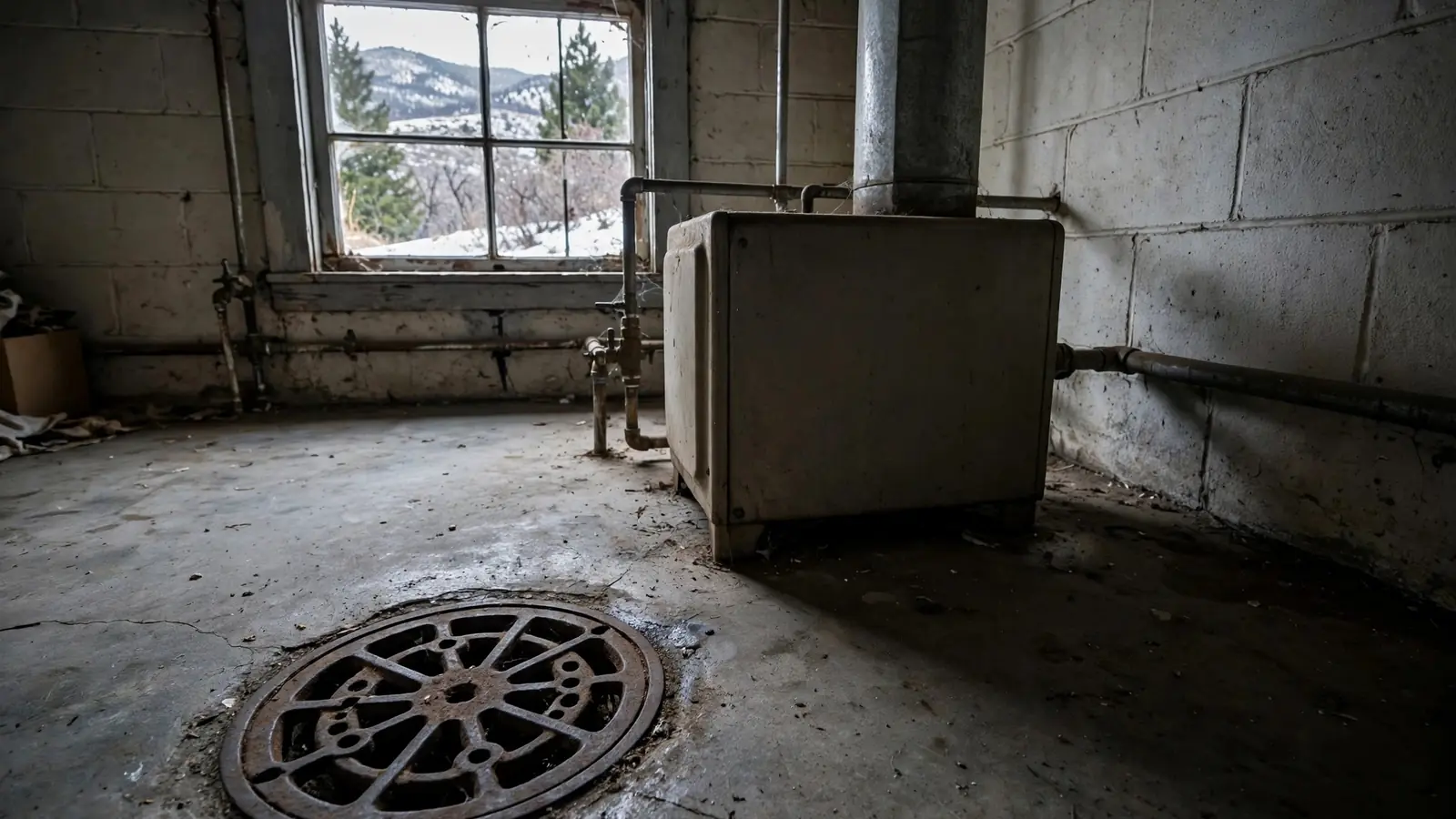
The floor drain in a Wheat Ridge basement is usually near the furnace, water heater or laundry, and in older homes it may be the only drain on that level. It is there to catch overflow, and that makes it the first place a backup appears. Floor drains have a trap that needs water to block sewer gas; if the trap dries out, the basement smells of sewer even with no backup.
Some homeowners install a backwater valve or a standpipe plug on the floor drain to stop sewage coming up. Whether that is suitable depends on how the house is plumbed, so it is a question for a licensed plumber, and some work needs a permit.
- Pour water into rarely used floor drains
- Keep the area around the drain clear
- Ask a plumber about a backwater valve
Odor
Getting rid of the smell
Sewage odor lingers when contaminated material is left behind. The most effective odor control is thorough removal and cleaning: taking out everything porous that the sewage touched and scrubbing hard surfaces until no residue remains. Once that is done, drying and ventilation usually clear what is left.
Masking products and air fresheners only cover the smell for a while. If odor returns after cleanup, something was missed: a wet bottom plate inside a wall, sewage under a cabinet base, or residue in a crack in the slab. Tell your contractor; they should come back and find it.
Health
Health considerations during and after cleanup
Anyone working in sewage should wear waterproof boots, gloves, eye protection and suitable respiratory protection, and wash thoroughly afterwards. Cuts and scrapes should be cleaned and covered. OSHA guidance for flood and sewage cleanup lists these precautions for workers, and they make sense for homeowners too.
After cleanup and disinfection, the area should be safe to use again once it is dry. If anyone in the household feels unwell after exposure to sewage, contact a medical provider and mention the exposure.
Insurance
Sewer backup and your insurance
Sewer backup is one of the most commonly misunderstood parts of homeowners insurance. Many standard policies exclude water that backs up through sewers or drains unless you have added a water backup endorsement, and that endorsement often has a separate limit. Flood policies may cover a backup that is caused directly by flooding, but the details vary.
Call your insurer early and ask specifically about sewer and drain backup. Keep the plumber's report on the cause, because it often decides whether the claim is accepted. The Colorado Division of Insurance publishes consumer guidance and accepts complaints if you believe a claim is being handled unfairly. [5] Our guide to working with your insurance adjuster has more on documenting the loss.
Prevention
Lowering the risk of another backup
The best prevention is knowing the condition of your sewer lateral. A camera inspection shows roots, cracks, sags and offset joints. If roots are a recurring problem, the line can be cleaned on a schedule or repaired with lining or replacement; a licensed plumber can explain the options.
Inside the house, keep grease out of drains, use drain screens, and never flush wipes, even ones labeled flushable. In a basement with a toilet or shower below the sewer line, an ejector pump needs periodic checks. If you are finishing a basement, consider how a future backup would affect it, and choose flooring that can be cleaned rather than carpet near the floor drain.
Before you call
Information that helps on the call
You do not need all of this, but these details let the contractor give useful guidance right away.
- Where the sewage came upFloor drain, toilet, shower or a wall.
- How far it spreadRooms affected and whether it reached carpet.
- When it startedTime matters for contamination and mold.
- Whether the line has been clearedIf not, more may come up.
- Whether neighbors are affectedThat points to the public main.
Finished basements
Sewage in a finished basement
A backup in an unfinished basement with a concrete floor is unpleasant but relatively simple: remove the waste, scrub and disinfect the concrete, dry it. In a finished basement the same backup soaks carpet, pad, drywall, baseboards, doors, cabinets and furniture. The cleanup becomes a partial demolition of whatever the water reached.
Contractors usually remove drywall to a height above the visible contamination line, because sewage wicks into gypsum just as clean water does. Bathroom vanities and kitchenette cabinets made of particleboard often come out. Interior doors with hollow cores that sat in sewage are usually replaced. It can feel like a lot, but leaving contaminated material inside walls brings odor and mold back later.
When the basement is rebuilt, it is worth rethinking the finishes closest to the floor drain: tile or sealed vinyl plank, cement board at the bottom of walls, and plastic baseboard are all easier to clean if it ever happens again.
Upstairs
When sewage comes from an upper floor
Sewage does not always rise from below. A blocked toilet upstairs can overflow repeatedly while the household tries plunging, and the water soaks into the bathroom subfloor and runs through to the ceiling below. A cracked drain stack inside a wall can leak waste for weeks before staining shows. These losses are harder because the contamination is hidden inside floors and walls.
The approach is the same in principle: find the full extent of contamination, open the floor or ceiling as needed, remove contaminated materials, clean and disinfect the framing, and dry it. Expect the contractor to cut open the ceiling below a bathroom overflow, because insulation and drywall there will have absorbed the water.
Comparison
Sewage cleanup compared with a clean-water leak
| Decision | Clean water leak | Sewage backup |
|---|---|---|
| Protective equipment | Basic | Full: gloves, boots, eye and respiratory protection |
| Carpet | Often saved | Discarded |
| Drywall | Dried if possible | Removed above the contamination line |
| Hard surfaces | Cleaned | Cleaned and then disinfected |
| Contents | Many dried | Porous items discarded |
| Occupancy | Usually stay | Keep away from the area until clean |
Contractor standards
What to expect from a careful sewage cleanup
A careful contractor treats a sewage job as contaminated from the moment they arrive. They keep the dirty area separate from the rest of the house with plastic sheeting, set up a path for carrying bagged debris out without dragging it through clean rooms, and remove protective equipment before walking through the house. Tools and equipment that touched sewage are cleaned before they leave.
Expect clear explanations: why each material is being removed, what product is used for disinfection, and how long the area will be off limits. If any part of that is vague, ask. The IICRC S500 standard is the reference document most restoration firms work from for contaminated water, and many contractors are familiar with it.
Waiting
What to do while you wait for help
- 1
Stop all water use
Tell everyone in the house not to flush, shower, run the dishwasher or do laundry.
- 2
Close off the area
Shut the basement door and keep children and pets upstairs.
- 3
Photograph from a safe spot
Take photos and video of the water, the drain it came from and anything damaged, without wading in.
- 4
Call your insurer
Report the loss and ask about sewer backup coverage.
- 5
Move clean items
If you can reach them without touching sewage, lift valuables from nearby dry areas.
Cold weather
Frozen and blocked lines in winter
Backups are not only a wet-weather problem. In cold snaps, a sewer lateral with a sag can collect water that freezes and narrows the pipe, and grease hardens faster in cold lines. Homes that sit empty for a holiday can return to a frozen supply pipe and a flooded basement at the same time, mixing clean and contaminated water.
If you are leaving a Wheat Ridge home for more than a few days in winter, keep the heat on, consider shutting off the main water valve, and ask someone to check the house. A water alarm by the floor drain will warn of a backup early.
Afterwards
Before the basement is rebuilt
- Confirm the cause is fixedA camera report showing a clear line gives confidence that the backup will not repeat next week.
- Check readingsFraming and concrete should be dry before new materials go in.
- Consider a backwater valveAsk a licensed plumber whether one suits your plumbing.
- Review your coverageAsk your agent about a water backup endorsement and its limit.
Commercial and rental
Sewage in rentals and small businesses
In rental homes and duplexes, a sewer backup raises questions about who calls whom. Tenants should tell the landlord immediately and stay out of the affected area; landlords usually arrange the plumber and cleanup. For restaurants, salons and other small businesses in Wheat Ridge, a backup can force a closure until the area is cleaned, and health rules may apply. Our commercial water damage page covers business losses.
Myths
Common beliefs about sewage cleanup that are wrong
Bleach is not a cure-all. Pouring bleach over sewage does little when organic matter is still present, and mixing bleach with other cleaners can release dangerous gases. Cleaning comes first, disinfection second. Another common belief is that a carpet can be shampooed after a backup; the contamination reaches the backing and pad, so shampooing only cleans the surface.
People also assume that once the water is gone the danger is over. Residue on concrete, framing and in cracks can still carry bacteria until it is properly cleaned and disinfected.
FAQ
Sewage cleanup questions from Wheat Ridge homeowners
Is it safe to clean up sewage myself?
A small overflow on a hard floor, with gloves and care, may be. A sewage backup across a basement involves serious contamination and is usually handled by a professional.
Can my carpet be cleaned after a sewer backup?
Generally no. Carpet and pad soaked by sewage are discarded.
Who do I call for the blockage itself?
A plumber or drain cleaner clears your lateral. If neighbors are affected, contact the sewer district that serves your address.
How long does sewage cleanup take?
Removal and cleaning are often done in a day or two, then drying adds several more days.
Will the smell go away?
Yes, once all contaminated material is removed and surfaces are cleaned and dried. Persistent odor means something was missed.
Does homeowners insurance cover sewage backup?
Often only with a water backup endorsement. Ask your insurer directly.
Should I keep using the toilets?
No. Stop running water until the blockage is cleared.
Can I call in the middle of the night?
Yes. Backups often happen during the morning rush or late at night, and calls at either time reach an independent contractor.