
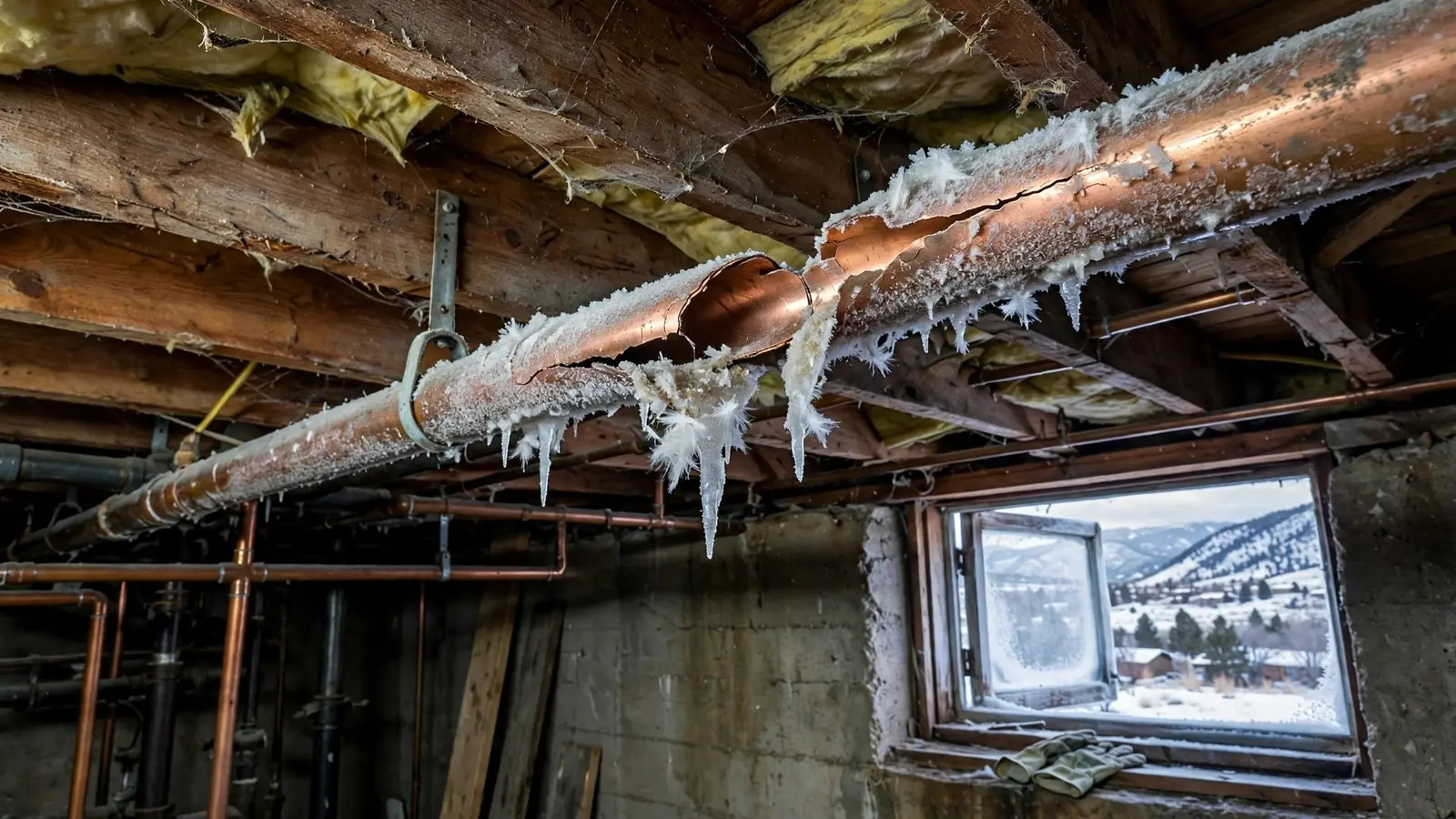
Key facts: Burst pipe water damage
- Water expands as it freezes, building pressure inside a pipe until it splits.
- Burst pipes often leak only after the ice thaws, so damage may appear hours after the freeze.
- Pipes in exterior walls, crawl spaces, garages and near basement rim joists are most at risk.
- The American Red Cross recommends keeping heat steady and letting faucets drip during severe cold.
- Sudden pipe bursts are commonly covered by homeowners insurance, while gradual leaks often are not.
Why pipes burst
How freezing splits a pipe
When water freezes it expands. In a pipe, the ice forms a plug and keeps growing, squeezing the water trapped between the ice and a closed faucet. Pressure builds until the pipe splits, usually somewhere other than where the ice is. Copper splits along a seam, plastic may crack or a fitting may push off, and old galvanized pipe can open at a threaded joint.
The pipe often does not leak while frozen. The split is plugged by ice. When the house warms up in the morning or the sun hits the wall, the ice melts and water pours out at full supply pressure. That is why many burst pipes are discovered mid-morning or after someone comes home.
Where
Where pipes freeze in Wheat Ridge houses
Exterior walls
Kitchen and bathroom supply lines on outside walls, especially north-facing.
Basement rim joists
Pipes running along the top of foundation walls where cold air leaks in.
Crawl spaces
Under additions, with little insulation and drafts.
Garages
Lines to utility sinks or upstairs bathrooms over a garage.
Hose bibs
Outdoor faucets that are not frost-free, with a hose still attached.
Fire sprinkler lines
In attics or stairwells of multifamily buildings.
When it bursts
What to do when a pipe bursts
- 1
Shut off the main
Close the main water valve right away; then open a faucet at the lowest point to drain pressure.
- 2
Make it safe
Keep away from water near electrical equipment; turn off breakers to wet areas if you can reach the panel safely.
- 3
Check other pipes
If one froze, others may have too; look for frost and bulges.
- 4
Photograph
Record the split pipe and the damage before cleanup.
- 5
Call a plumber
To repair the pipe and check the rest of the system.
- 6
Start water removal
Mop and wet-vac; call a restoration contractor if more than a small area is wet.
Cleanup
How burst pipe damage is cleaned up
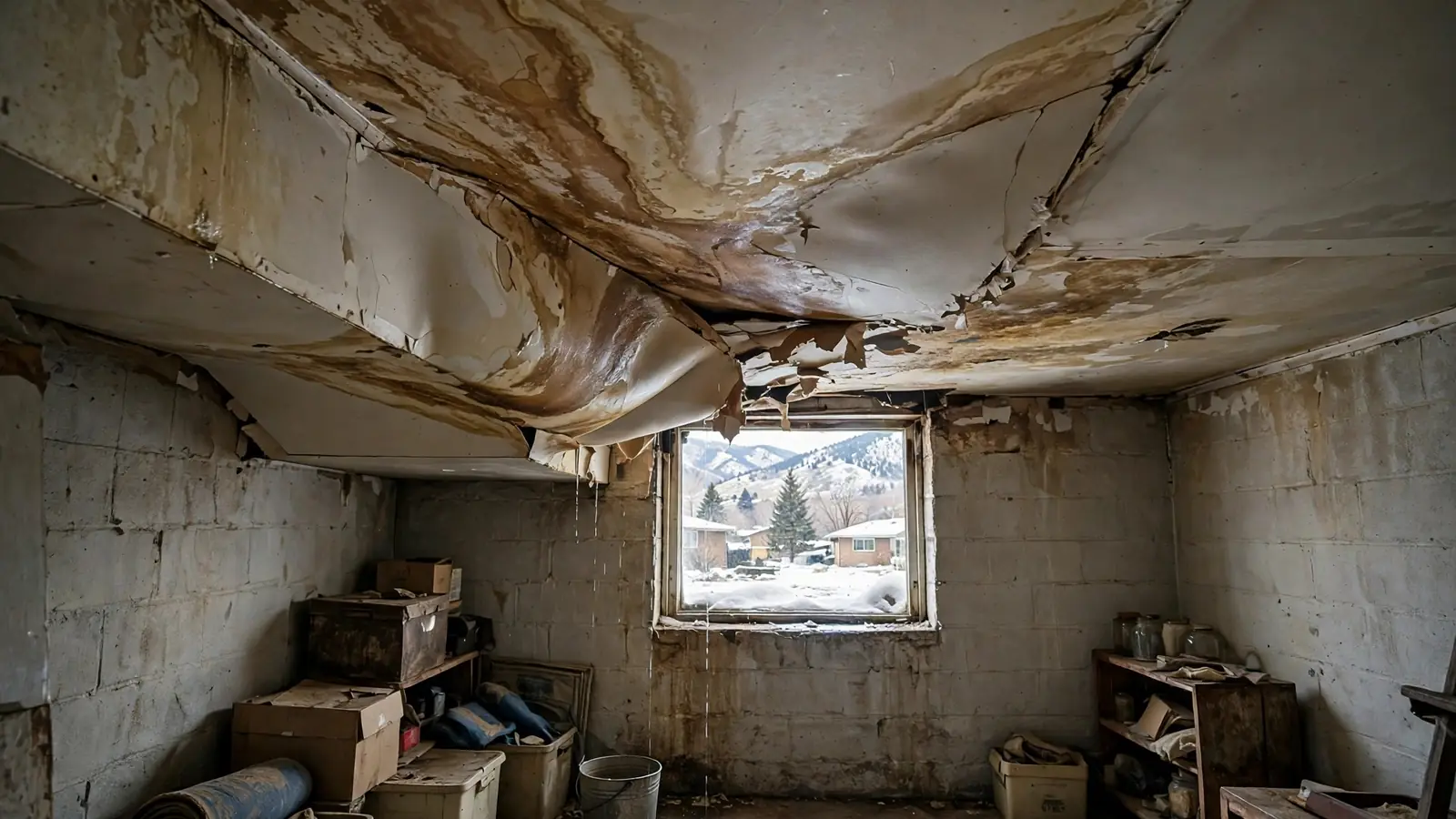
Water from a supply pipe starts clean, which is good news: much of the house can usually be dried rather than torn out, if work starts quickly. A contractor extracts standing water, pulls wet carpet pad, removes baseboards, and measures how far water has wicked into walls. Drywall that is soaked is cut out; drywall that is only damp at the bottom may be dried in place.
If the pipe burst inside a ceiling or wall, that area is opened to remove wet insulation and get air in. Dehumidifiers and air movers then run for several days while readings are tracked. Our water mitigation and drying page explains that stage.
Pipe types
How different pipes fail
| Pipe | Typical failure | Notes |
|---|---|---|
| Copper | Split along the length | Repair by cutting out the split section |
| PEX plastic | Fitting pushes off or pipe bulges | More freeze-tolerant than copper but not immune |
| Galvanized steel | Opens at threaded joints | Often a sign the system is aging |
| CPVC | Cracks, especially when old and brittle | Fittings can snap |
Prevention
Preventing frozen pipes
Keep the thermostat steady day and night during cold snaps, rather than turning it down sharply at night. Open cabinet doors under sinks on exterior walls so warm air reaches the pipes. Let a faucet drip on the coldest nights; moving water is less likely to freeze and an open faucet relieves pressure. Disconnect garden hoses in fall and shut off and drain outdoor faucets if they are not frost-free.
Insulate pipes in crawl spaces, garages and along basement rim joists, and seal air leaks around them. If you go away in winter, keep the heat on and ask someone to check the house, or shut off the main and drain the lines.
Insurance
Burst pipes and insurance
Homeowners insurance commonly covers sudden, accidental water damage from a burst pipe, though the pipe repair itself may be treated differently from the water damage it caused. Insurers may question claims if the house was left unheated or unoccupied for a long time, so keep heat on and check your policy's requirements if you travel. Report the loss promptly and keep the failed section of pipe if you can.
Warning signs
Signs a pipe is frozen before it bursts
On a very cold morning, a faucet that gives only a trickle or nothing at all is the clearest sign of a frozen pipe. You may also see frost on an exposed pipe, or a section that looks slightly swollen. A toilet that does not refill is another clue. If you spot any of these, keep the faucet open, warm the area gently, and check along the pipe for splits as it thaws. Having the main shutoff within reach while you do this is wise.
If you cannot find the frozen section or cannot reach it, a plumber can locate and thaw it. Do not leave the house while a pipe is thawing, because that is when a split will start to leak.
Hidden bursts
When the burst is inside a wall
A pipe that splits inside a wall or ceiling may not show at all for a while. Water runs down inside the cavity, soaking insulation and the bottom plate, before it appears as a stain, bubbling paint or water at the base of the wall. If your water meter is turning when everything in the house is off, there is a leak somewhere.
Contractors use moisture meters and thermal cameras to trace water inside walls, then open the wall where needed. Our guide to hidden moisture behind walls covers this in more detail.
Before winter
A short pre-winter checklist for Wheat Ridge homes
- Disconnect hosesBefore the first hard freeze, usually in October.
- Insulate exposed pipesIn crawl spaces, garages and along basement rim joists.
- Seal draftsAround pipes where they pass through exterior walls.
- Test the main shutoffMake sure it turns and closes fully.
- Plan for tripsKeep the heat on and arrange for someone to check the house.
FAQ
Burst pipe questions
Why did my pipe burst when it warmed up?
The split happened while frozen, but ice plugged it. When the ice melted, water could escape.
Can I thaw a frozen pipe myself?
Gently, with a hair dryer or warm towels and a faucet open. Never use an open flame.
Will my drywall need replacing?
Only if readings show it soaked through. Clean water caught early often allows drying in place.
Can I call at night?
Yes. Pipes usually split overnight and leak on the morning thaw; calls at either time are connected to an independent contractor.