
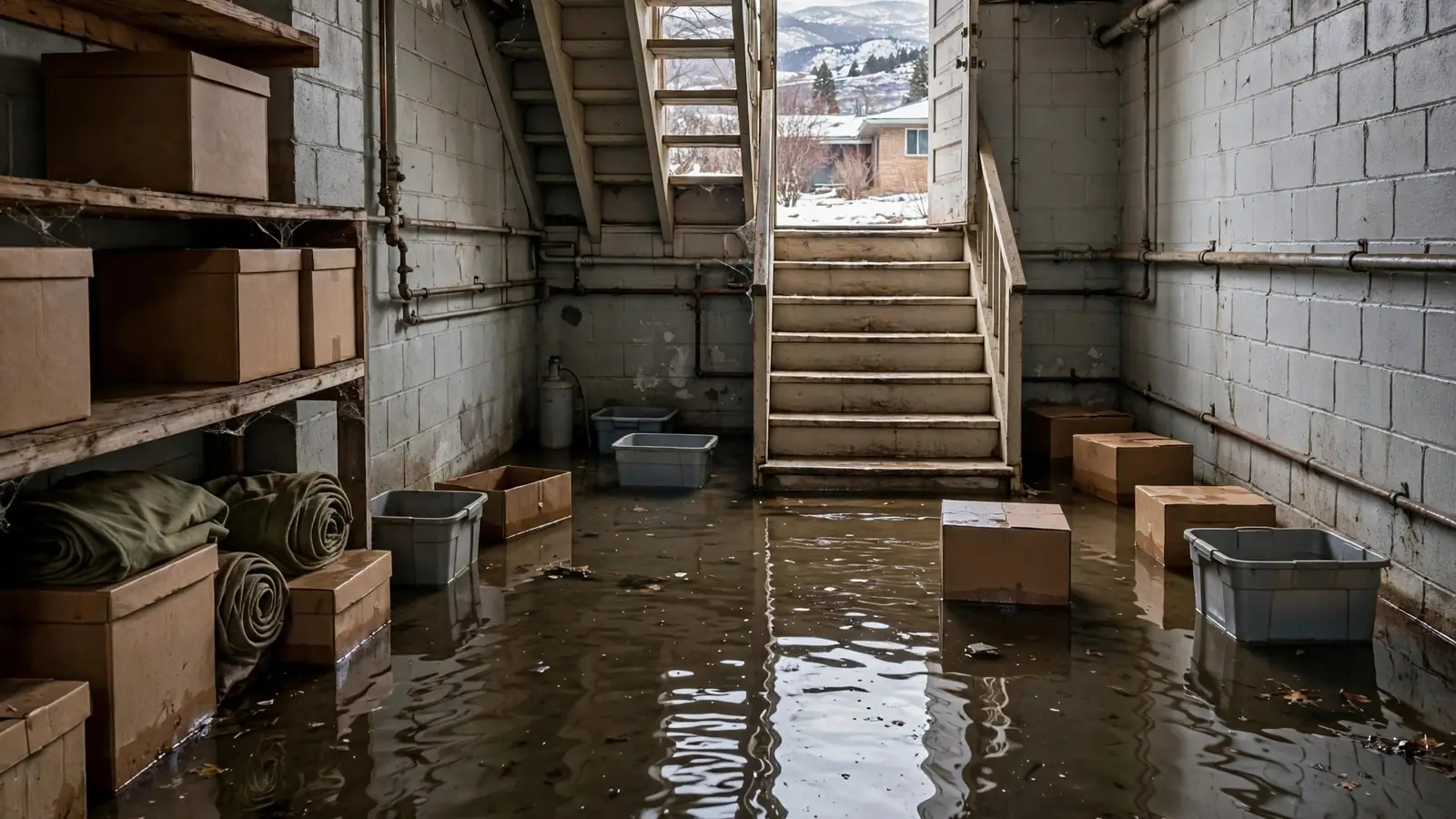
Key facts: Basement flooding
- Basement water can come from plumbing, appliances, groundwater, surface runoff or sewer backup.
- Water that enters from outside or from the sewer is treated as contaminated.
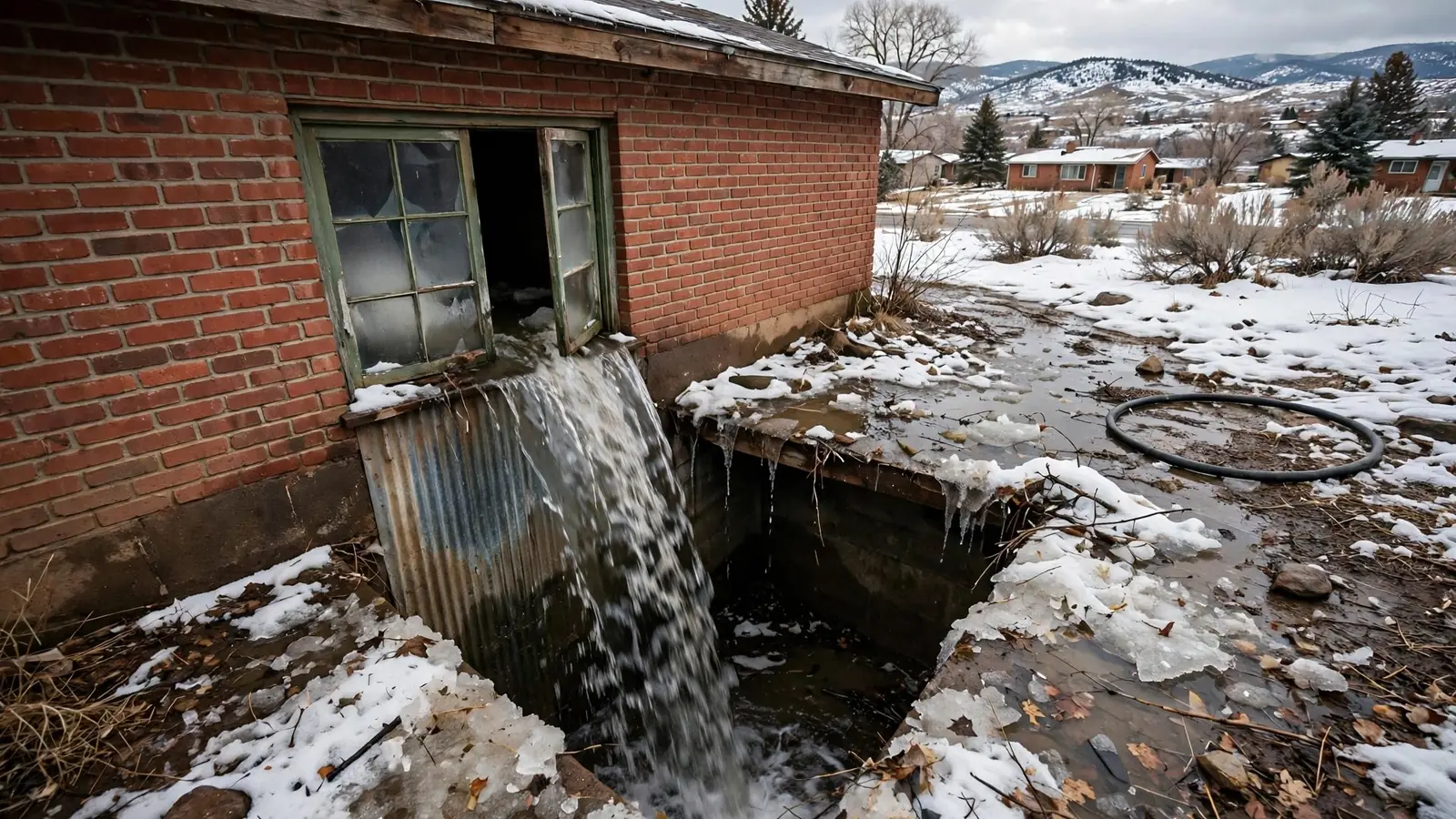
- Window wells with blocked drains are a common entry point during storms and snowmelt.
- Standard homeowners policies usually exclude flood and often exclude sewer backup unless an endorsement is added.
- The EPA advises drying wet materials within 24 to 48 hours to help prevent mold.
Diagnosis
Five ways water gets into a basement
| Cause | Typical clues | Water type |
|---|---|---|
| Plumbing or appliance failure | Water near the washer, water heater or under a pipe; clear water | Clean or gray |
| Window well overflow | Water at a window; mud in the well; during a storm | Contaminated |
| Groundwater seepage | Thin sheet at the floor-wall joint; spring or after long rain | Usually treated as gray |
| Surface runoff | Water at doors or the garage; silt; during a storm | Contaminated |
| Sewer backup | Water rising from the floor drain or basement toilet; odor | Contaminated |
Plumbing
Plumbing and appliance floods
Inside causes are the most common: a washing machine hose, a water heater tank, a burst supply pipe, a sump pump that failed, or a leak from a bathroom above. The water is usually clean at first, so carpet and much of the drywall can often be dried. Find and shut the valve for the failed item or the main shutoff, and the flow stops.
These losses are the ones most likely to be covered by a homeowners policy if they were sudden. Keep the failed part if you can.
Window wells
Window wells and surface water
Storm water and snowmelt that collects around the foundation will find the easiest way in, and in Wheat Ridge that is often a window well. Wells are meant to drain through gravel at the bottom, but leaves, soil and snow clog them. During a downpour the well fills and water seeps around or breaks the window. Water running down a driveway into an attached garage or a basement stairwell is another common route.
Because this water has crossed the yard, it is treated as contaminated. Carpet and pad it soaked are usually discarded. For insurance, surface water is generally considered flood, which needs a flood policy.
Groundwater
Groundwater seepage
When the soil around your house is saturated, water presses against the foundation and the floor. It seeps in at the joint between wall and floor, through cracks and around pipe openings. In Wheat Ridge this is most common in spring, after heavy wet snow melts quickly, and near Clear Creek when it runs high with mountain runoff.
Seepage is usually slow, and cleanup is often manageable, but it comes back each wet season unless drainage is improved: better grading, extended downspouts, an interior drain and sump, or exterior waterproofing. Many insurance policies exclude groundwater seepage altogether.
Sewer
Sewer backups
If water is coming up through the floor drain, a basement shower or the basement toilet, especially if it is dark or smells, the sewer line is backed up. Stop running water in the house immediately, or more will come up. Keep away from the water and call for help; this is a sewage cleanup, with protective equipment and removal of porous materials.
Have a plumber clear and camera-inspect your lateral to find the cause. Sewer backup is often excluded from homeowners insurance unless you have a water backup endorsement.
Next steps
What to do once you know the cause
- 1
Stop or wait out the water
Shut a valve for plumbing leaks; for outside water, wait for it to stop entering before pumping.
- 2
Stay safe
Keep away from electrical equipment; wear boots and gloves for dirty water.
- 3
Record the entry point
Photos and video showing how water got in help your claim.
- 4
Remove water
Pump, extract and wet-vac; for floods, pump gradually if the ground is still saturated.
- 5
Call for cleanup
A restoration contractor handles removal and drying.
- 6
Fix the cause
Plumber, waterproofing contractor or grading work, depending on the source.
Prevention
Keeping your basement dry
Clean gutters and extend downspouts several feet from the house. Make sure soil slopes away from the foundation. Clean window wells and check their drains before winter and spring. Test sump pumps each spring. Replace rubber washer hoses and watch the base of the water heater. Know where your main shutoff is. Store important items in plastic bins on shelves rather than cardboard on the floor.
For short answers to related questions, see the quick-answer FAQ, or browse all of our guides.
Sump pumps
When the sump pump fails
Homes with a sump pump depend on it to keep groundwater below the floor. Pumps fail because the float sticks, the motor wears out, the discharge line freezes or clogs, or the power goes out during a storm. When that happens, water rises in the pit and spreads across the floor, sometimes within an hour in a wet spring.
Test the pump in early spring by pouring water into the pit. Check that the discharge pipe carries water well away from the foundation and is not frozen. A battery or water-powered backup and a high-water alarm are worth considering. Water from a failed sump is usually treated as clean or gray, depending on how long it sat, but many homeowners policies only cover sump failure with a specific endorsement.
Finished basements
Why finished basements suffer most
An unfinished basement with a concrete floor and bare walls can take a lot of water and dry out with a mop and a fan. A finished basement cannot. Carpet and pad, drywall, insulation, wood trim, built-in furniture and stored belongings all absorb water and either need careful drying or removal.
If your basement has flooded once, consider rebuilding with materials that tolerate water: tile or vinyl plank flooring, moisture-resistant board at the bottom of walls, plastic baseboard and storage on shelves. The next flood, if it comes, will be much easier to recover from.
Wheat Ridge specifics
Local factors that raise basement flood risk
- Clear Creek and Lena GulchHomes near either can see higher groundwater or storm runoff.
- Mid-century clay lateralsOlder sewer lines are prone to roots and backups.
- Heavy spring snowWet snow melting fast saturates soil around foundations.
- Summer cloudburstsShort, intense storms overwhelm gutters and window wells.
FAQ
Basement flooding questions
How do I know if it is groundwater or a leak?
Groundwater appears along walls and the floor-wall joint, often after wet weather. Leaks start near a pipe or appliance.
Is basement flooding covered by insurance?
It depends on the cause. Sudden plumbing leaks often are; flood, groundwater and sewer backup often need separate coverage.
Should I pump out a flooded basement right away?
For plumbing leaks, yes. For outside flooding with saturated soil, pump gradually.
Can I call at night?
Yes. Calls are taken around the clock and connected to an independent contractor serving Wheat Ridge.